product
What it does, shown on the real thing.
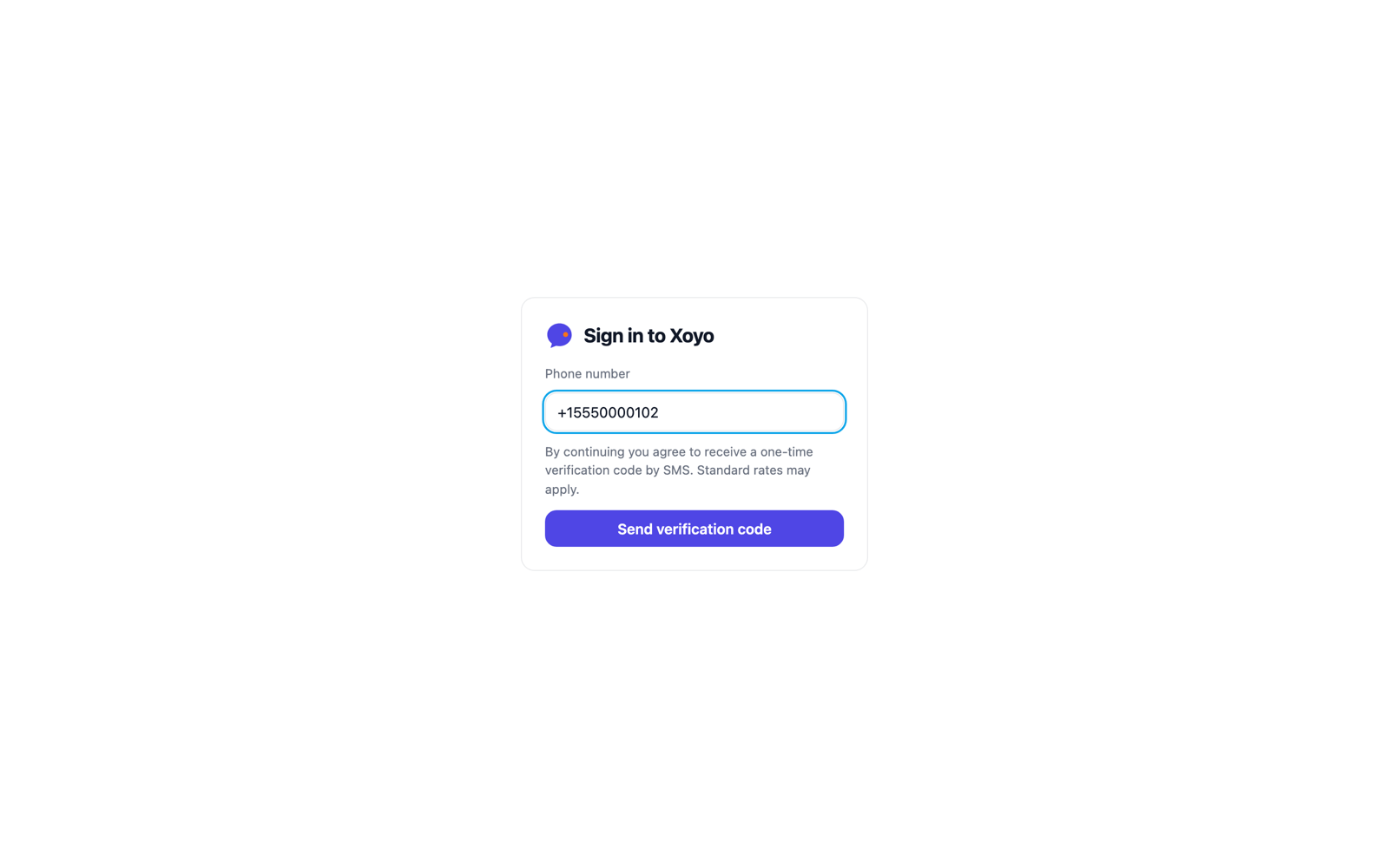
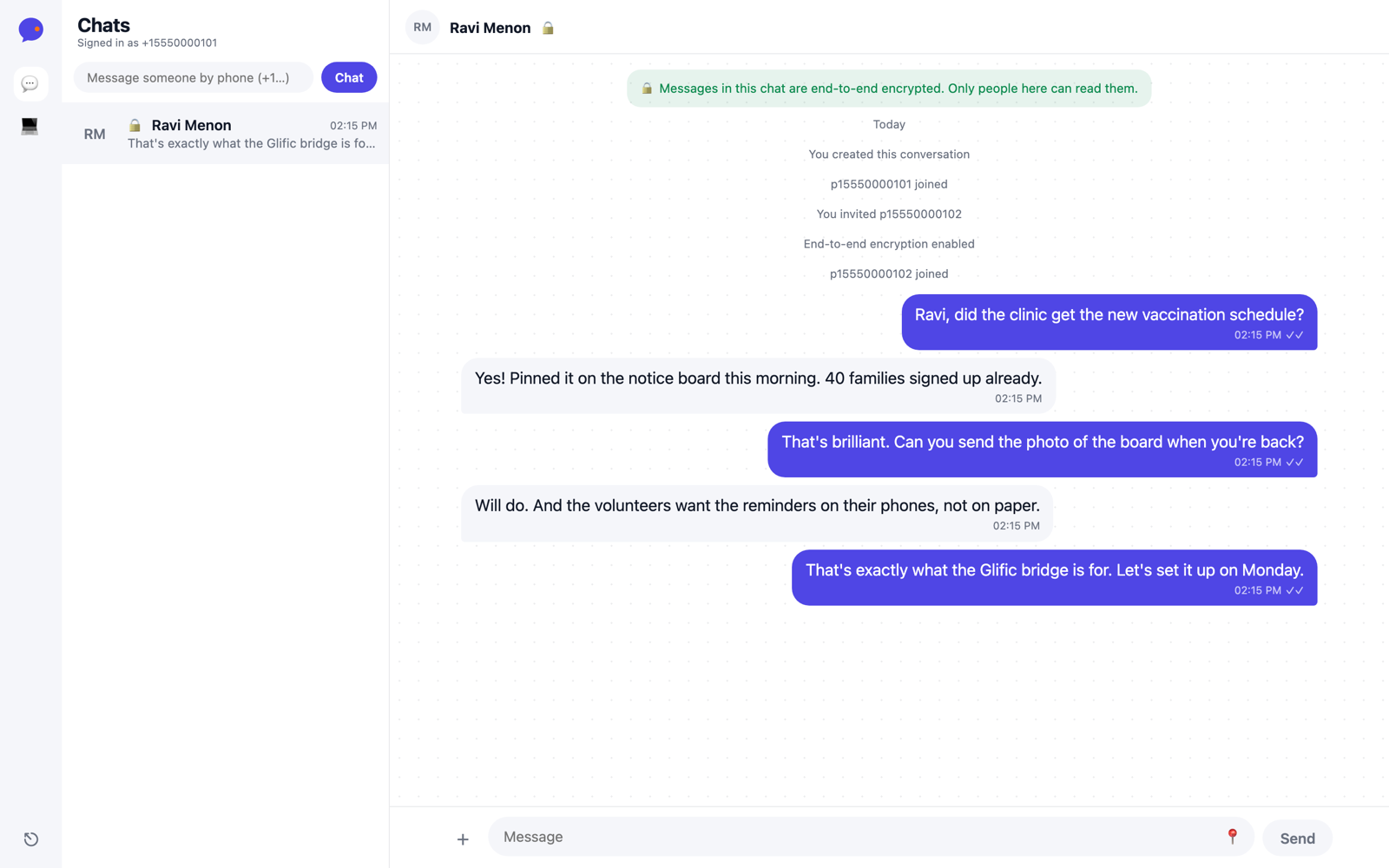
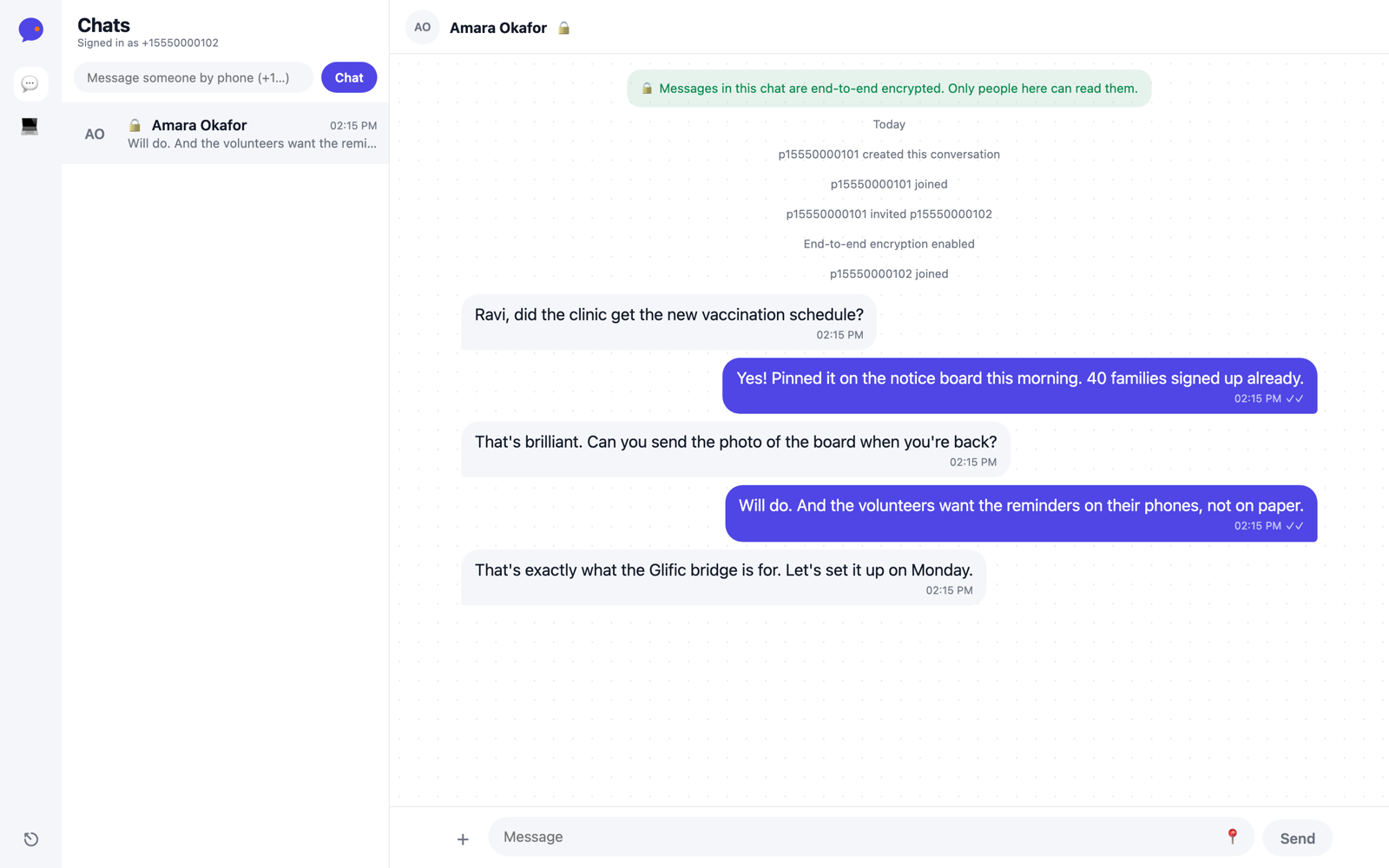
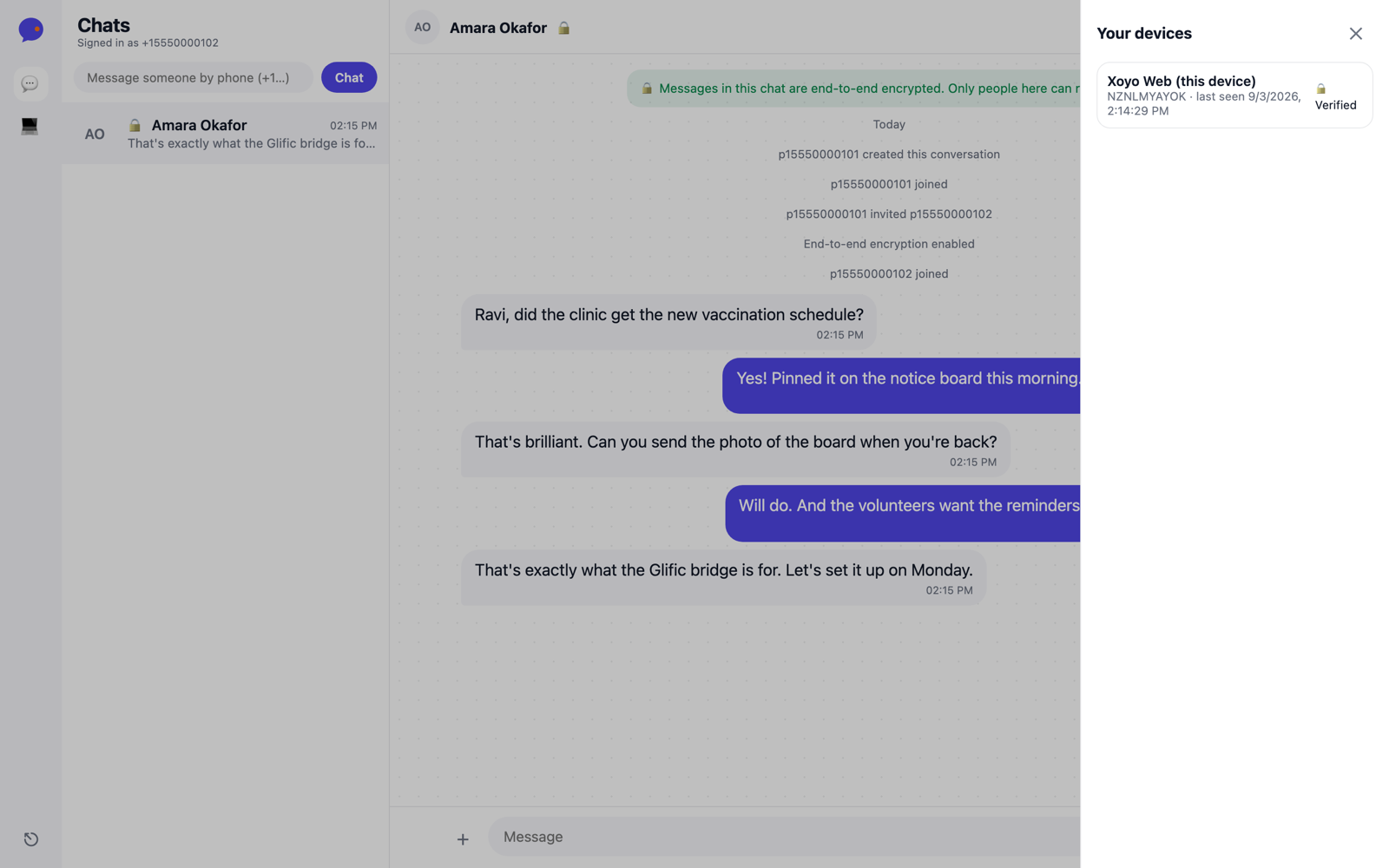
Every screenshot on this page was captured from the development build on 3 September 2026 with test accounts. Nothing is a mock-up. Feature status further down maps to numbered requirements in the product spec and to task ids in the roadmap.
Web app
A three-zone layout: conversations, the thread, and a devices panel. Runs in any modern browser against your own homeserver.
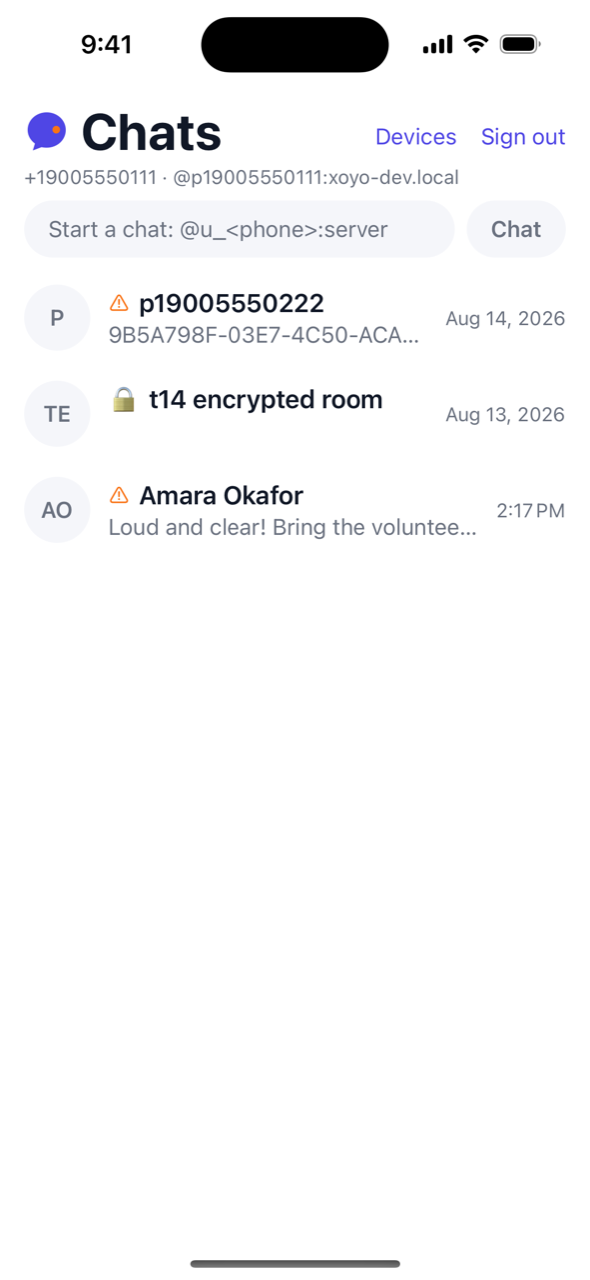
Mobile app
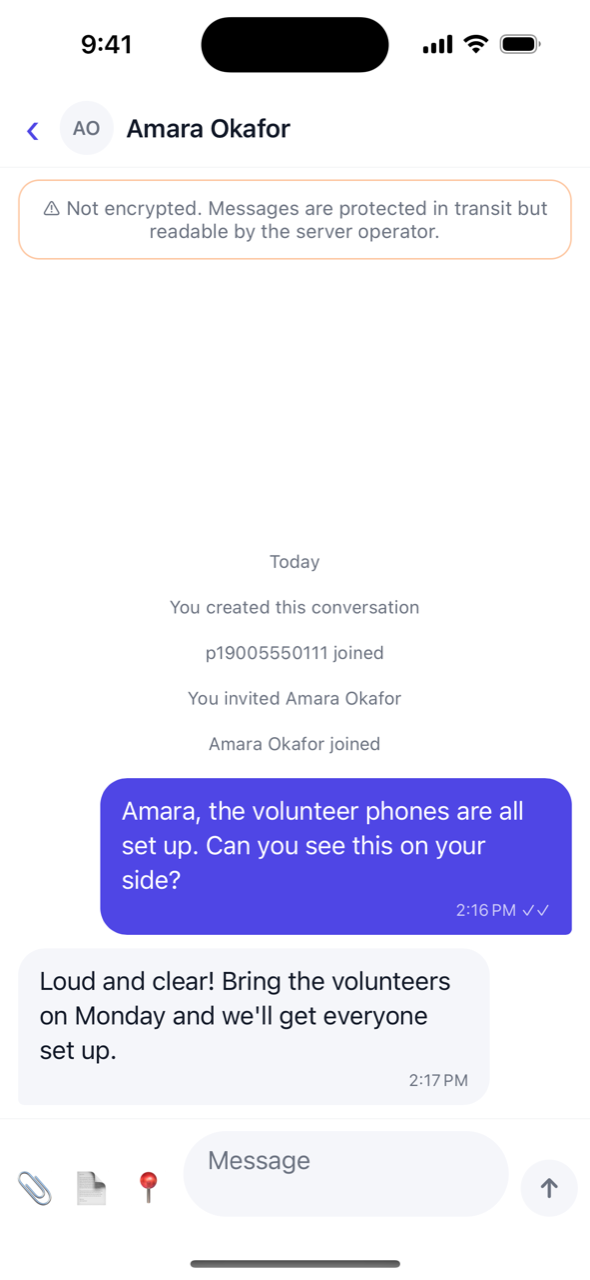
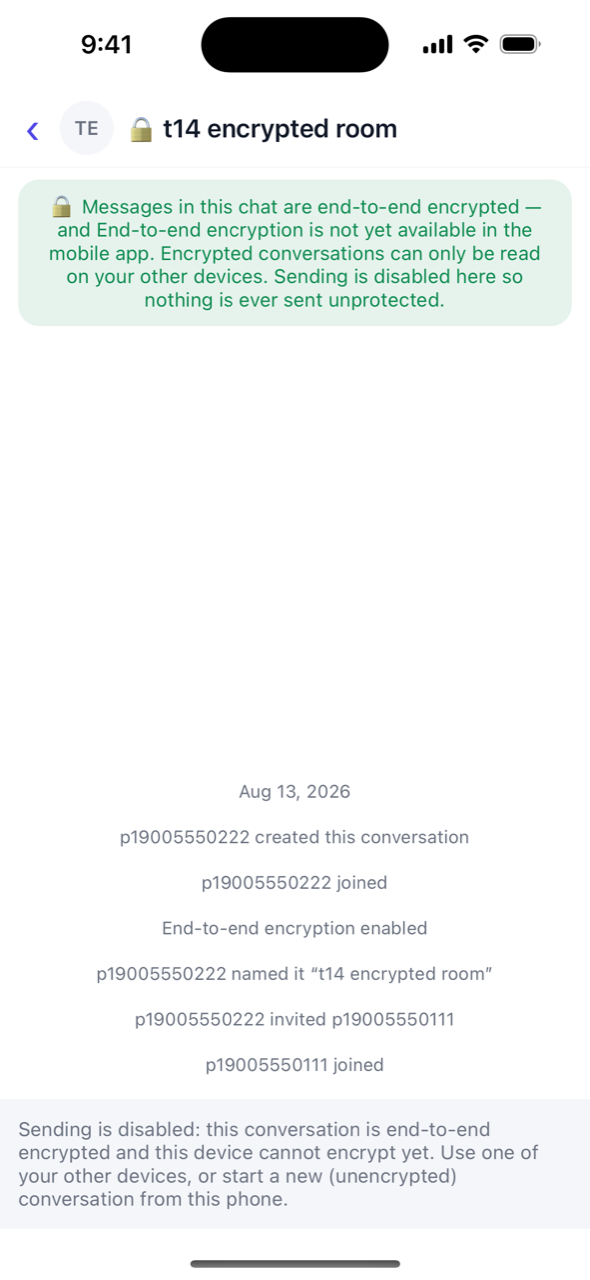
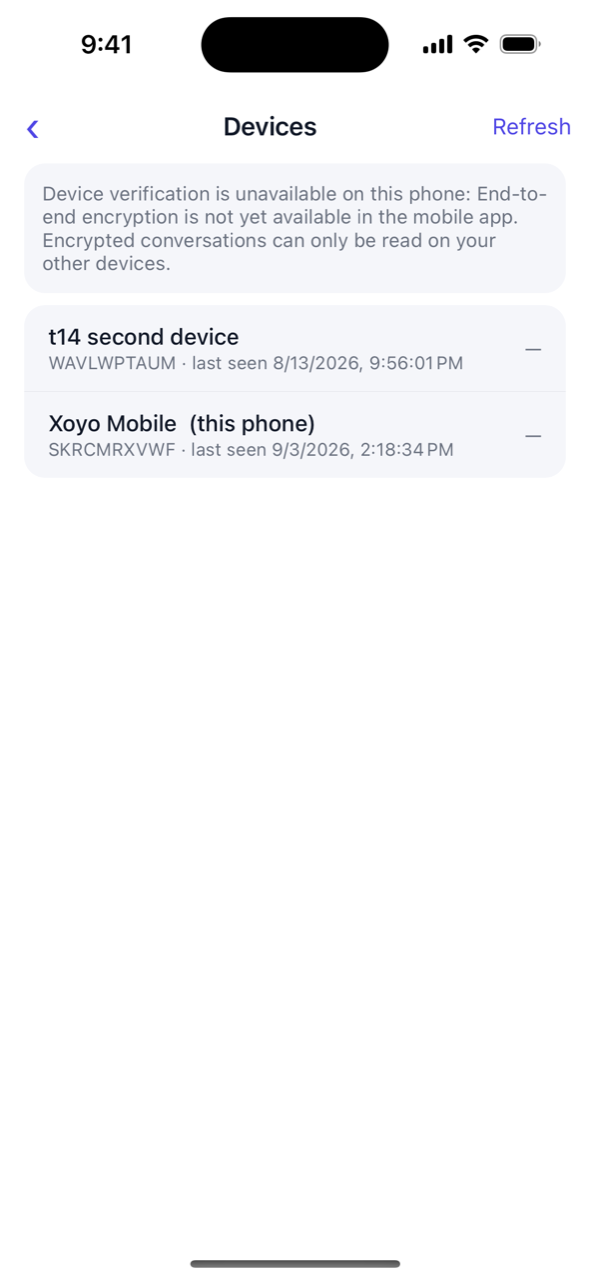
React Native for iOS and Android, sharing logic with the web client. Shown here on the iPhone simulator.
Feature by feature
Chips are derived from the task ledger. Shipped means built with tests and verified live. Building means in progress now. Planned means not started.
- F-1
Phone-first accounts shipped
Sign up with a phone number verified by one-time code. Your phone number is your identity, mapped to a Matrix account behind the scenes.
- F-2
Messaging with receipts shipped
Text, images, audio, video, documents and location, with delivery and read receipts, on Matrix’s Client-Server API rather than a home-grown protocol.
- F-3
Multi-device, one identity shipped
Phone and web signed in together, history and keys synced between your devices with Matrix’s device verification.
- F-4
End-to-end encryption, honestly labeled shipped
Direct conversations are encrypted by default with Olm/Megolm. Every room shows its state; bridged rooms are marked in amber, always.
- F-6
Media that scales shipped
Uploads and downloads through S3-compatible object storage behind a CDN, content-addressed, on any provider that speaks S3.
- F-9
Reliable background work shipped
Push dispatch, media processing and webhook delivery run on a Postgres-backed job queue. No extra broker to operate.
- F-11
White-label branding layer shipped
Name, icon, logo, splash, colors and bundle identifiers come from one typed config. The brand switcher in this site’s header runs on the same tokens.
- F-8
Web client shipped
React and TypeScript. Sign-in, conversations, encrypted rooms, devices. Responsive layout below tablet width is on the fix list.
- F-7
Mobile client shipped
React Native for iOS and Android with the core messaging UI. Device encryption on mobile is the next tier; over-the-air updates follow it.
- F-10
Organization bridge into Glific shipped
A Matrix Application Service exposing a Gupshup-compatible API: send, template send, template discovery, signed webhooks, session window and consent, interactive messages, pacing, health. Verified live with a Glific instance. Details on the organizations page.
- F-5
Push notifications building
The backend fan-out for APNs, FCM and web push is shipped. Wiring it into the apps waits on production push credentials.
- T-15
Instant mobile updates planned
Self-hosted over-the-air delta updates so fixes reach phones without waiting on store review.
Want to see it on your own numbers?
A pilot runs on a server we stand up for you or on yours, with your brand on the apps. Tell us what you run over chat today.